
-
Partager cette page
The PolyCIVIS network successfully closes its current funding phase
Publié le 12 juin 2026
– Mis à jour le 12 juin 2026
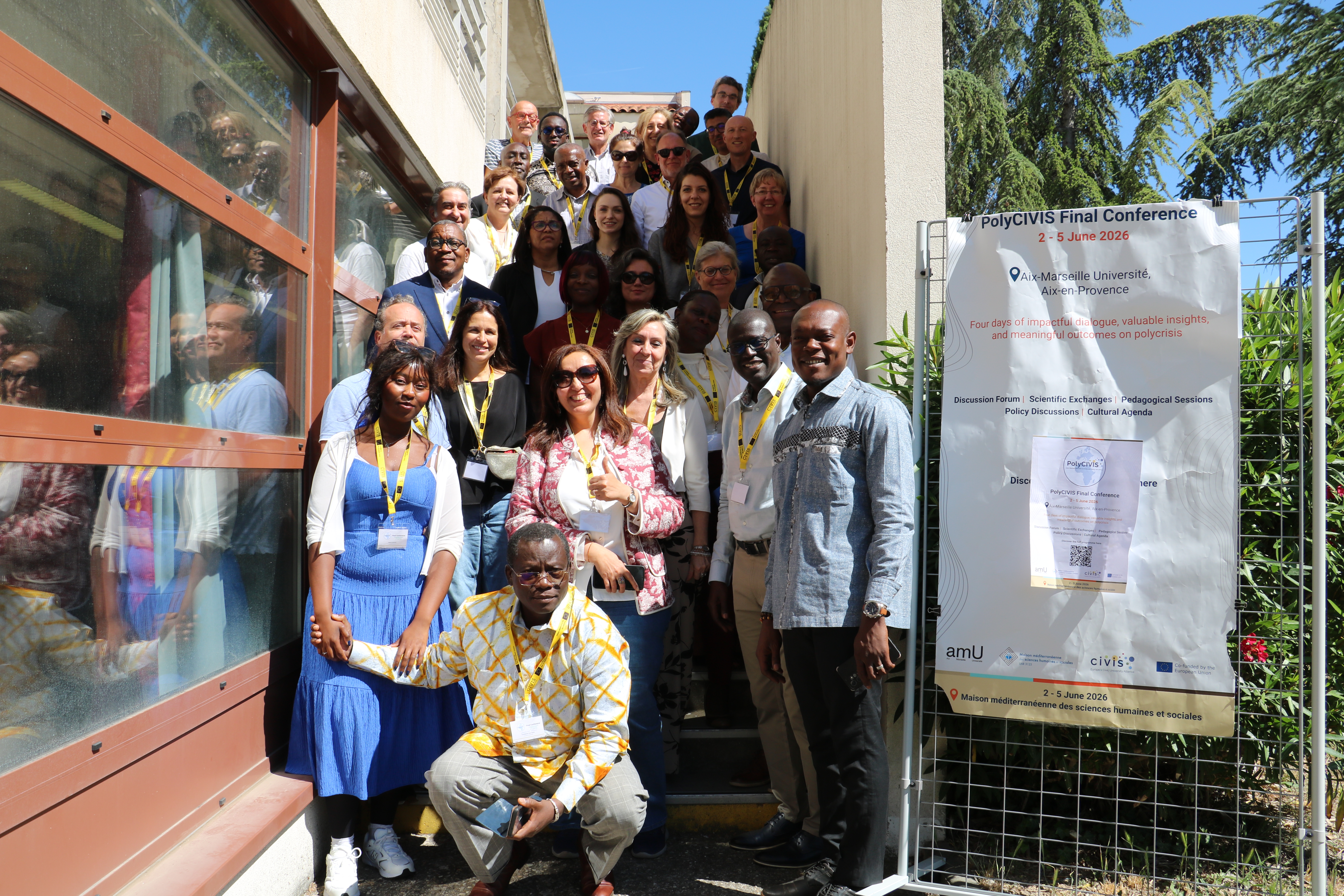
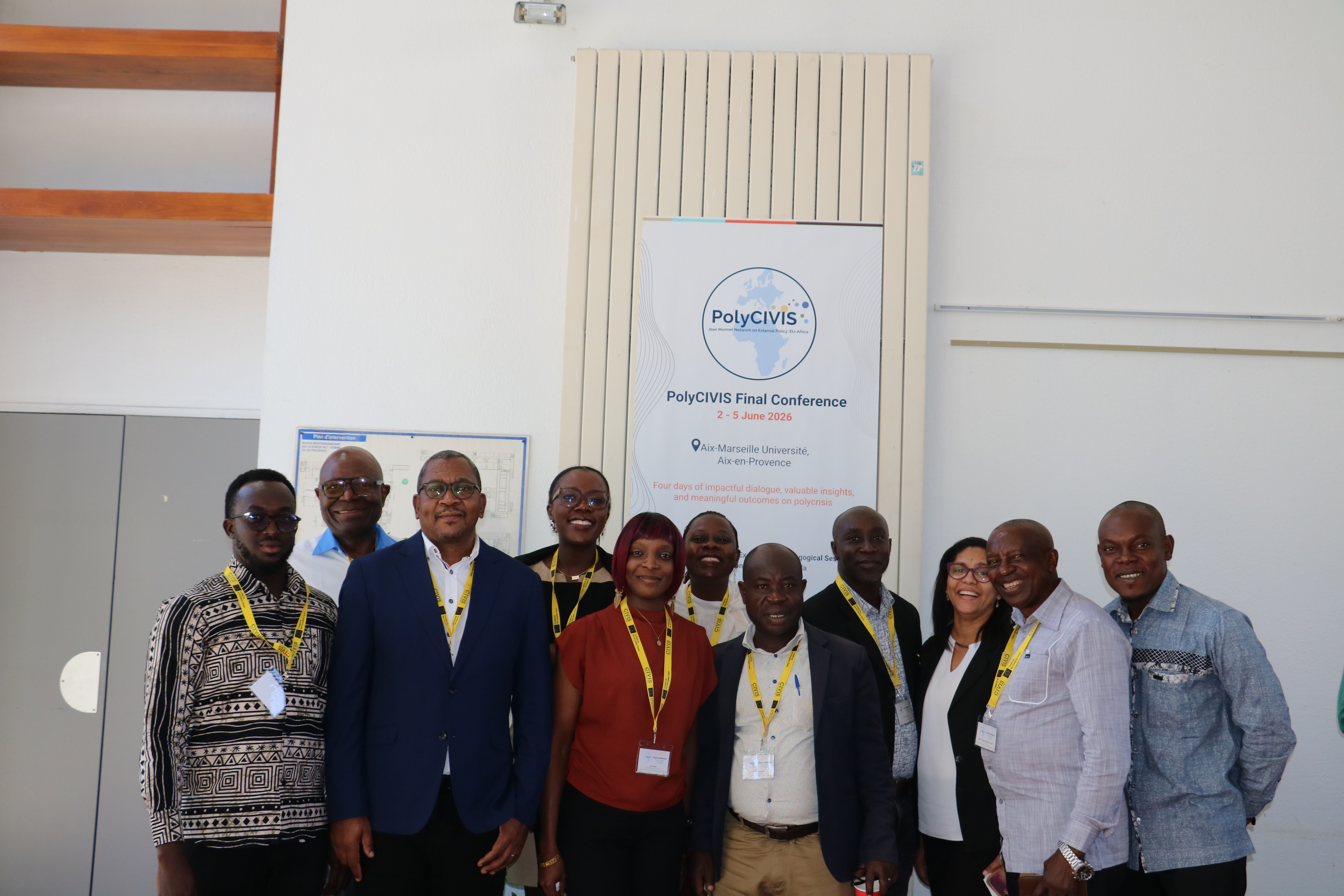
The PolyCIVIS network*, comprising 21 African and European universities and funded by the European Union through the Erasmus+/Jean Monnet Programme, successfully convened its final conference from 2-5 June 2026 at Aix-Marseille Université. Established in 2023, PolyCIVIS was created as a platform for Africa-Europe collaboration and dialogue in research, education, and policy engagement. Its work is anchored in the polycrisis concept, meaning the systemic interaction of overlapping economic, social, political, environmental, and security crises that reinforce one another, generating compounded, unpredictable, and long-term effects beyond the capacity of conventional governance frameworks.
Key Conference discussions and outcomes
The Final Conference provided an opportunity to reflect on the achievements of the network, assess ongoing activities, and identify future avenues for cooperation. Key sessions included:- Discussion of final project reporting requirements and preparations for project closure;
- Presentations by each Work Package outlining major achievements, outputs, and ongoing activities;
- Presentation of the edited volume "Facing Polycrisis Together: A Euro-African Perspective";
- Dedicated exchanges on developments in the Sahel region and their broader implications for understanding and responding to the polycrisis; and
- Exploration of future collaboration and innovation opportunities.
Youth resilience in the face of the polycrisis
A highlight of the conference was the Discussion Forum entitled, "Polycrisis: Youth Resilience in the Face of Conflict, Forced Migration, and Climate Change". The Forum examined how governance challenges, armed conflict, environmental degradation, and migration dynamics intersect to shape the lived realities of young people across Africa and Europe.Participants underscored the importance of youth agency in responding to the polycrisis and called for:
- Institutionalisation of youth leadership and participation in decision-making processes;
- Increased investment in education, skills development, and employment opportunities;
- Enhanced support for youth-led peacebuilding and climate action initiatives;
- Strengthened mental health services and social inclusion policies; and
- Deeper African Union-European Union cooperation to advance equitable and sustainable solutions for future generations.
Advancing polycrisis education
The Conference also devoted attention to innovative pedagogical approaches for teaching and studying the polycrisis. Discussions focused on participatory and transdisciplinary methodologies in higher education and the role of universities in preparing future leaders to navigate complex and interconnected crises.Participants reviewed progress on the Polycrisis Handbook, an online resource entitled "How to Study the Polycrisis". The fifteen-chapter handbook is scheduled for publication in July 2026 and is expected to serve as an important educational resource for students, researchers, and practitioners.
Another key educational activity included in the conference was the "Blended Intensive Programme (BIP) Simulation: Teaching Polycrisis Management - The Case of the Kampala Waste Crisis", organised within the framework of the BIP Polycrisis management. The simulation highlighted innovative experiential learning approaches designed to strengthen students' analytical and practical skills in addressing complex policy challenges.
Building on previous PolyCIVIS milestones
The final conference built upon the achievements of two previous annual gatherings in Brussels (January 2024) and Dakar (April 2025).The network is now advancing the development of an Erasmus Mundus Joint Master entitled "Tackling the Polycrisis", involving an equal number of diploma-awarding partner universities from Africa and Europe. Submission of the proposal, led by University of the Witwatersrand, is planned in February 2027.
The conference demonstrated that addressing the challenges of the polycrisis requires sustained partnerships, interdisciplinary approaches, and inclusive dialogue between stakeholders across both continents. The legacy of PolyCIVIS is therefore expected to extend well beyond the project's formal completion, contributing to stronger Africa-Europe cooperation in research, education, and policy for years to come.
*For further details